Showing posts with label Narrative Non-Fiction. Show all posts

Wednesday, May 13, 2015

Leaving Orbit: Notes From the Last Days of American Spaceflight by Margaret Lazarus Dean


That spaceflight sendoff on the cover is now a thing of the past as the American space program has been slowly dismantled and is now a shadow of its former glory days. As she asks the question: “What does it mean that we won’t be going into space anymore,” space junkie Margaret Lazarus Dean counts down the last days of the shuttle program and describes them with bittersweet emotions. The somewhat narrow perspective, limited to fellow enthusiasts at Cape Canaveral, leaves you wanting more at times, yet Dean’s enthusiasm — mixed in with equal part outrage — ultimately shines through.

Saturday, April 11, 2015

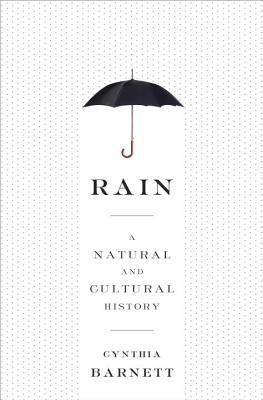
Rain: A Natural And Cultural History by Cynthia Barnett


Even if you’re the kind who can’t take soggy weather, you’ll love Rain: A Natural and Cultural History. A whole host of intriguing topics — rainmakers, the earthy perfume of rain, the mechanics of rain — and more are captured under that cheerful brolly. Environmental journalist Cynthia Barnett travels the world over (from the wettest place in the world, Cheerapunji, in India, to an umbrella store in London) to deliver stories dripping with personality. Her enthusiasm for her subject translates brilliantly on to the page. For lovers of social science, the perfect shelter to dive into on a rainy day.

Tuesday, February 3, 2015

In Manchuria: A Village Called Wasteland And the Transformation Of Rural China


In the vast tundra of Manchuria, in China’s Northeast, farming is still very much a part of the landscape, the biting winters affording just enough of a window for harvesting rice. The small town of Wasteland is where Frances, the author’s wife is from, and it is where Meyer spends a year chronicling not just the farming season but the impending irreversible changes soon to come knocking. This is a breathless and lively tour of Manchuria’s history and China’s evolving agrarian policies told through the eyes of a veteran investigative reporter. A side of the Asian behemoth not often seen.

Monday, January 19, 2015

A Man Of Good Hope by Jonny Steinberg


Blikkiesdorp, might be Cape Town’s “asshole, the muscle through which the city shits out the parts it does not want,” but for Somali refugee, Asad Abdullahi, Tin Can Town is a step up compared to the hell he has been through. Just eight when violence in Mogadishu split his family asunder, the young and enterprising Asad moved from city to city, country to country, forever pursuing a dream of stability. This is a brilliantly reported story of hope against overwhelming odds, and survival in the bleakest circumstances. It brings home the refugee’s plight like no news bite can. A must-read.

Thanks to Knopf for an ARC.

Why Did the Chicken Cross the World? by Andrew Lawler


The chicken’s footprint might be tiny but its impression on humanity remains large. Science reporter Andrew Lawler expertly traces its movement from early domestication and the jungles of south Asia, to today’s production of billions of pounds of broiler meat for world consumption. Even if at times it seems as if Lawler packs way too much information into its pages, this is an engaging look at man’s big bird and its impact on almost every aspect of our lives: religious, cultural, medicinal and more. Think the dog is man’s best friend? Well, the chicken really makes a more compelling case.

Sunday, November 23, 2014

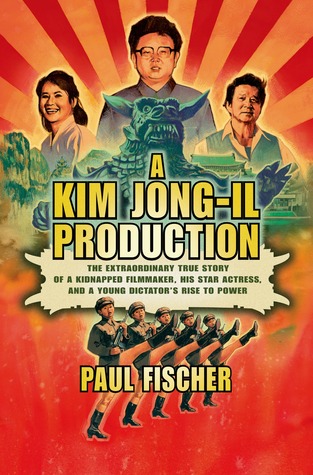
A Kim Jong-Il Production by Paul Fischer


Kim Jong-Il, the North Korean leader, was an avid movie fanatic. Realizing the power of the medium to sell his version of the country’s story, he arranged to abduct South Korean cinema’s golden couple: movie director Shin Sang-Ok and actress Choi Eun-Ee, and forced them to make propaganda movies. This is a blockbuster account of not just a bizarre true story but of the surreal North Korea of the ‘70s and’ 80s. It is also a brilliant exploration of cinema as political tool. Celluloid can be crafted to tell any story be it one of escape or mass delusion.

Thanks to BookBrowse's First Impressions program for an ARC.

Saturday, October 4, 2014

Cities of Empire: The British Colonies And the Creation Of the Urban World by Tristram Hunt


We already know that the footprint of the British empire is vast and impressive but zoom out from a bird’s eye view and travel the globe, and the scale of the project is enough to take your breath away. Spanning the centuries from the eighteenth century in Boston (and those pesky Puritans) to the twentieth century back home in Liverpool, Tristram Hunt systematically details not just the early beginnings of empire in each city but also charts how Britain’s very definition of the word changed over time. A fascinating read not just for history buffs but for every global citizen.

Thursday, September 25, 2014

The Language of Food: A Linguist Reads The Menu by Dan Jurasky


The relationship between crackers, ice cream and “sound symbolism,” what constitutes the “grammar” of a meal, these are the many breezy offerings served up. Since linguistics is closely tied with history, we travel the world to see the commonality between fish and chips and sikbaj, and ketchup and fish sauce. While the topics selected seem to be a tad arbitrary and the tasty morsels leave us longing for more, this is a delicious romp. Eat it in all one big bite or even better, as one of the many fun old recipes included here would instruct, “lette it boyle” slowly.

Wednesday, August 27, 2014

Dr. Mutter's Marvels: A True Tale of Intrigue and Innovation At the Dawn of Modern Medicine by Cristin O'Keefe Aptowicz


It was no fun being a surgical patient in the 1800s. For that matter, being a surgeon was no picnic either. Anesthesia came on the scene only later in the century, worse, there was hardly any light by which to operate. Yet one surgeon, Thomas Dent Mutter, changed the field of surgery in remarkable ways. Best known for his contributions to the field of plastic surgery, Mutter would treat people whom everyone else considered as mere “monsters.” Aptowicz’s impressive, well-researched biography reveals that what a surgeon needs most in his toolkit is one that Mutter had in ample doses: empathy.

Wednesday, June 4, 2014

Shadows in the Vineyard: The True Story of a Plot to Poison the World's Greatest Wine by Maximillian Potter


You can’t leave a story this good bottled up for long: La Domaine de la Romanee Conti, the best of the best vineyards in the world, and its esteemed owner Monsieur Aubert de Villaine, were once the target of extortion. Exactly who would drill the prized grape vines with a view to poison them? And why? Despite occasional overwrought writing, this lively account traces the rich history of Burgundy’s famous vineyard and unearths a detective story that affirms the old adage: fact can be a lot stranger than fiction. The result goes down as smoothly as the best grand cru.

A longer review of this book will be published in a July edition of The BookBrowse Review. Thanks to the publishers for a galley.

Sunday, March 30, 2014

Birdmen: The Wright Brothers, Glenn Curtis, and the Battle to Control the Skies by Lawrence Goldstone


Practically everyone knows about the Wright brothers’ historic flight at Kitty Hawk. After that epic accomplishment, it was not just a variety of airplanes that soared, it was also the ambitions of many Birdmen who got into the exploding field of aviation. Occupying center stage were the brothers and Glenn Curtiss. The two sides’ protracted court battles over their craft, framed by U.S. patent law, shows what gets lost in such tussles. Even if the narrative stalls often, and you wonder if there is a piece of research that Lawrence Goldstone hasn’t crammed into Birdmen, it is compelling reading.

Thursday, February 6, 2014

Trapped Under the Sea: One Engineering Marvel, Five Men, and a Disaster Ten Miles Into the Darkness by Neil Swidey


Boston seems to have a penchant for huge engineering projects. The Big Dig might have been the attention-monger in its day but the cracks slowly making its way through Trapped Under the Sea belonged to yet another money-guzzler, the Boston Harbor cleanup. Part of this expensive solution involved work in constrictive underwater tunnels under extremely hazardous conditions. Neil Swidey deftly chronicles the divers’ problems and the disaster that unfolded. Even if at times the personal lives of the workers read too much like a made-for-television movie, the thoroughly researched narrative is superbly paced and the engineering details are incredibly absorbing.

Tuesday, December 3, 2013

Junkyard Planet by Adam Minter


One look at the heap of scrap on the cover and it would be easy to assume that Junkyard Planet is filled with preachy directives about consumption. But it’s this book’s subtitle that’s closest to what Adam Minter so adroitly achieves. Minter tracks our recyclables (including paper and even Christmas tree lights) as they are shipped to countries like China satisfying its insatiable demand for raw materials. While I would have loved learning more about the hows of the business, Junkyard Planet emerges nevertheless as an insightful look at an industry that is one of the many byproducts of consumerism.

A longer review of this title is at Mostlyfiction.com

Tuesday, November 26, 2013

The Race Underground: Boston, New York and the Incredible Rivalry That Built America's First Subway by Doug Most


The path from horse-drawn carriages in the late nineteenth century to electric subways was not always a linear solution, nor was it easy. Relief from congestion in Boston and New York, two of the country's early-growth cities, was to be the metaphorical “light at the end of the tunnel.” It is interesting that today, any grander agenda for the expansion of subways -- or public transportation in general -- seems to have taken the back burner, superseded by Americans' love of the automobile. 

Nevertheless Doug Most's chronicle of how the subways got their start in two of the most dynamic metropolises in the United States makes for riveting and compelling reading. Highly recommended, especially for history geeks.

Anything That Moves: Renegade Chefs, Fearless Eaters, and the Making of a New American Food Culture


The empty plate on the cover of Anything Moves is fitting for the blank canvas possibilities today’s world of food presents. As New Yorker writer, Dana Goodyear shows us, there are many who are pushing the boundaries of what to present on a plate and how. Atomized lavender anyone? 

The book is mostly Goodyear’s reporting pieces from The New Yorker cobbled together and the lack of a cohesiveness to the entire volume, sometimes peeks through. Nevertheless this is an infinitely engaging and delicious look at avante-garde cuisine in the United States and the players and foodies who make it happen. 

A longer review of this book is at BookBrowse.com

Friday, April 26, 2013

Review: Salt Sugar Fat by Michael Moss


I can see you rolling your eyes already. "Yes," you say, "I know that too much salt, sugar and fat are bad for me." After all, you've probably at least come across Michael Pollan's commandment: "Eat food. Not too much. Mostly plants." You don't really need to read another killjoy volume, you think. Well, think again. The absolutely brilliant Salt Sugar Fat: How the Food Giants Hooked Us is a well-researched and well-reported book that despite its loaded subject, doesn't sound preachy and never wags its finger at you, the end-consumer.

Read the rest of the review at BookBrowse.com. 

Thursday, January 17, 2013

Review: Consider the Fork: A History of How We Cook and Eat by Bee Wilson


I can never remember my grandmother without remembering the smoke-filled kitchen she worked in day in and day out. One of her best creations was rasam, the lentil broth soup that is the cornerstone of South Indian cooking. It wasn't until I tried my hand at recreating the dish in the heat of her kitchen that I realized what a precise science the dish was, even though grandma seemed to churn it out daily with such nonchalance. The secret ingredient she swore by? A special pot called an eeya chombu, made with an alloy containing tin and other metals. My ninth grade self didn't realize that eeya chombu translated to "melting pot" - quite literally. Venturing into the kitchen one day while grandma was having a shower, I decided I would surprise her with a rasam of my own. I could do it. I had seen her make it many times, after all. But to my horror, as the soup gradually began to simmer and then violently boil over the untamed fire, the pot simply melted away. Not only had I lost my rasam but also my grandma's precious pot! Grandma, bless her soul, took in the scene of the crime with an extra dose of equanimity and Dad replaced the pot that very evening. All's well that ends well and my accident was forgiven and forgotten.

It was that temperamental kitchen tool - my grandma's eeya chombu pot - that I was reminded of while reading Bee Wilson's fascinating historical account of the implements we use in working with one of humankind's most basic drivers - food.

The rest of my review is at BookBrowse.

Review: Detroit City is the Place to Be by Mark Binelli


When Mark Binelli, a native of Detroit, and general assignment reporter, began work on a book about the city, one of his interview subjects asked him if the book was going to be fiction or non-fiction. "Non," Binelli replied. Binelli writes about the guy's reaction: "He snorted and said, 'No one's gonna believe it.'"

A large portion of Binelli's engaging book, Detroit City is the Place to Be, covers the stuff that "no one's gonna believe." No one, for example, is likely to believe that a once thriving boomtown had gone into such utter and total ruin. Large swathes of empty land, horrendous crime rates, and unemployment – if these issues are bad in urban areas around the country, they are much, much worse in Detroit. "If, once, Detroit had stood for the purest fulfillment of U.S. industry, it now represented America's most epic urban failure, the apotheosis of the new inner-city mayhem sweeping the nation like LSD and unflattering muttonchop sideburns," Binelli writes.

The rest of the review is at BookBrowse.

Wednesday, December 14, 2011

The New India

This picture of Au Bon Pain in Cambridge, MA, is from www.dogboston.com.


I had the chance to meet with the wonderful Siddhartha Deb recently. Over chai at Au Bon Pain in Cambridge, Deb talked about his latest book, The Beautiful and the Damned: A Portrait of the New India.


It's a wonderful look at contemporary India, warts and all. Check out my feature for Khabar.

REVIEW: White Mughals by William Dalrymple


Excerpt

William Dalrymple shot into fame as a travel writer with his In Xanadu, a travel account he wrote when just twenty. A self-confessed Indophile, many of his subsequent works (City of Djinns, Age of Kali) were set in India. His latest book, White Mughals, revisits India, and among other things, is a detailed history of Deccan politics during the late eighteenth century.

The rest of the review, originally published on June 18, 2003, is here.