Friday, July 17, 2020

Villa Pacifica by Kapka Kassabova


The fevered dreams that travel writer Ute experiences in Villa Pacifica might be related to the wild animals or the tropical environs she and her husband Jerry are trapped in. Traveling to a South American country, the couple find themselves in a strange mansion run by a couple of firangs. A suffocating sense of doom weaves itself throughout the narrative until Ute finds herself slowly doubting the play of events. Is everything not as it seems or is she going mad? While built on an intriguing premise, Kassabova’s fiction packs less of a punch than her powerful nonfiction travelogues do. 

Sunday, July 12, 2020

Migrations by Chalotte McConaghy

The Arctic tern’s migration is legendary: it travels all the way from the Arctic to the Antarctic Circle every year. Franny Lynch is determined to track these threatened birds as a way to redeem a past filled with her own flight from tragedy and the people she loves. As the story unfolds against the backdrop of accelerating climate change, we learn of the parallel reason for her ice-saturated voyage. Swashbuckling ride on rough seas notwithstanding, this is an extraordinary novel with plenty of room for quiet meditation, one that explores grief and familial bonds. Proof that still waters run deep. 

Friday, July 10, 2020

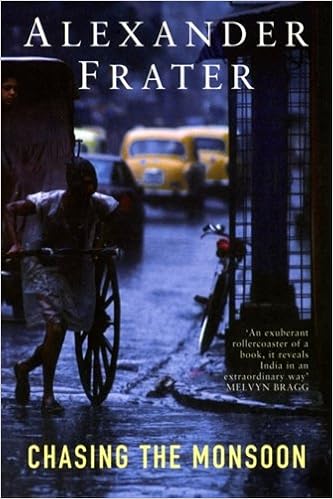
Chasing the Monsoon by Alexander Frater

One billion cubic feet of snow fell in Boston during the winter of 2015. There was so much snow that the city just quit plowing alleys after a while and carved out paths instead. You know...like an igloo. After that bruising winter, I remember how excited we all got when we saw the first blade of grass. When my in-laws visited us that spring, she asked why Americans got so super enthusiastic about spring. How to tell her about the snow? The cold? The numbing winds? Instead I said, “Imagine how you feel when the monsoon breaks after that insanely hot summer. It’s much the same feelings that spring brings about.” 
Even more so than spring, monsoon in India is tinged with awe and plenty of romance: the songs, the slow-roasted corn sold on the streets, the mini paper boats that children float on those sudden rivulets.
A native of Mumbai, known for its biting wind-driven monsoons, I was excited by the premise of this book: chasing the first monsoon rains all across India. Frater, an Englishman, starts from the very southern state of Kerala and moves north on to Goa, Mumbai, a huge jump to Delhi, Kolkata and on to Cherrapunji, the wettest place on earth. 
The travelogue that emerges is witty and engaging told with generous doses of empathy. I especially loved the sections on Trivandrum and Cherra. Because the author has to chase after the breaking of the monsoon across the subcontinent, he doesn’t linger. Which is a pity because after the initial joy comes the weary dampness that seeps into your very bones, which too would have made for great reading and a more measured view of the live-giving rains.
It’s hard to ignore the white colonial gaze here. Yes, it takes an agonizing two weeks and a painful walk through the notorious Indian bureaucracy for Frater to receive permission to visit Cherrapunji but only a native will recognize how easy it is otherwise for the author to lean on his whiteness to get access. At one point, Frater describes how Herman Kisch, a British Civilian officer, staved off devastating famine in India. While indeed commendable, I couldn’t help but roll my eyes at Frater’s labeling it as “a triumph of humanitarian engineering and one of the greatest gifts ever bestowed on India by the British.” Sure, that might be true but the lack of context is glaring.
All told, this is still a lively and quirky account that’s a revealing slice of India and its people. Tastes better when consumed with samosa and chai.
For the record, my favorite capture of monsoon in Mumbai still remains this Bollywood song from the ‘70s. Moushumi Chatterjee in a sari and Amitabh Bachchan in a suit (!) and the sheer abandon of giving in to the rain. Be still, my heart.
Editor's Note: This review is a departure from my usual 100-word capsules.

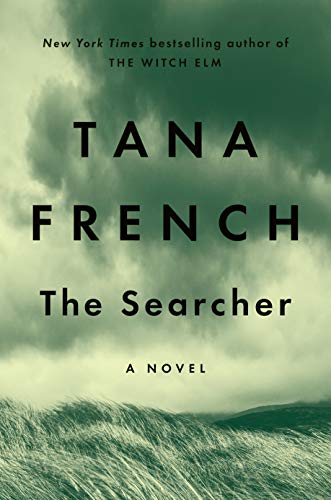
The Searcher by Tana French


The Irish countryside seems like the perfect refuge for Cal Hooper, a retired Chicago cop who’s still raking over the ashes of his failed marriage. But storm clouds threaten to take over. Trey, a taciturn teen, worries there’s something sinister behind his older brother Brendan’s disappearance. Soon Cal is knee-deep in the Irish bog and in the mystery. French’s writing is in fine form here but those expecting a fast-paced Dublin Squad-style thriller will be disappointed. The denouement too is more of a whimper than a punch, which is probably just as well, in keeping with the setting’s languid atmosphere.

Luster by Raven Leilani


Young Black Edie’s getting swept up in an affair with an older white man is not typically my jam. But Leilani’s vibrant writing and Edie’s gradual awakening bowled me over: “So, sure, an older man is a wonder because he has paid thirty-eight years of Con Ed bills and suffered food poisoning and seen the climate reports and still not killed himself, but somehow, after being a woman for twenty-three years, after the ovarian torsion and student loans and newfangled Nazis in button-downs, I too am still alive, and actually this is the more remarkable feat.” See what I mean?

Monday, July 6, 2020

Bottle of Lies: The Inside Story of the Generic Drug Boom by Katherine Eban

A scathing expose of the generic drugs industry, Eban’s reporting, especially in notoriously difficult-to-access India is commendable. The revelations will make you hesitate to ever settle for generics again. My small quibble with the narrative is that too much of it is trained on the misdeeds of one Indian company and too little on lax American oversight. It takes two to tango. Sure shocking manufacturing practices are to blame. But so is our bloated healthcare system which forces us into relying on sketchy outsourcing in the first place. A damning indictment of the lax oversight of the American pharma industry.

Saturday, July 4, 2020

The Perfect World of Miwako Sumida by Clarissa Goenawan

Contrary to the title, Miwako Sumida did not have a perfect world. So much so that she committed suicide. Ryusei, a fellow student at Tokyo’s Waseda university, whose feelings for Miwako go unrequited is determined to find out what drove his friend to kill herself. What unfolds is a surreal otherworldly mystery that travels from Tokyo to a remote mountaintop village. The lurching narrative misses a step occasionally and the storyline’s seams connecting Ryusei’s story to that of his sister, begin to strain after a while. But those looking for a light read might find this one worth their time.